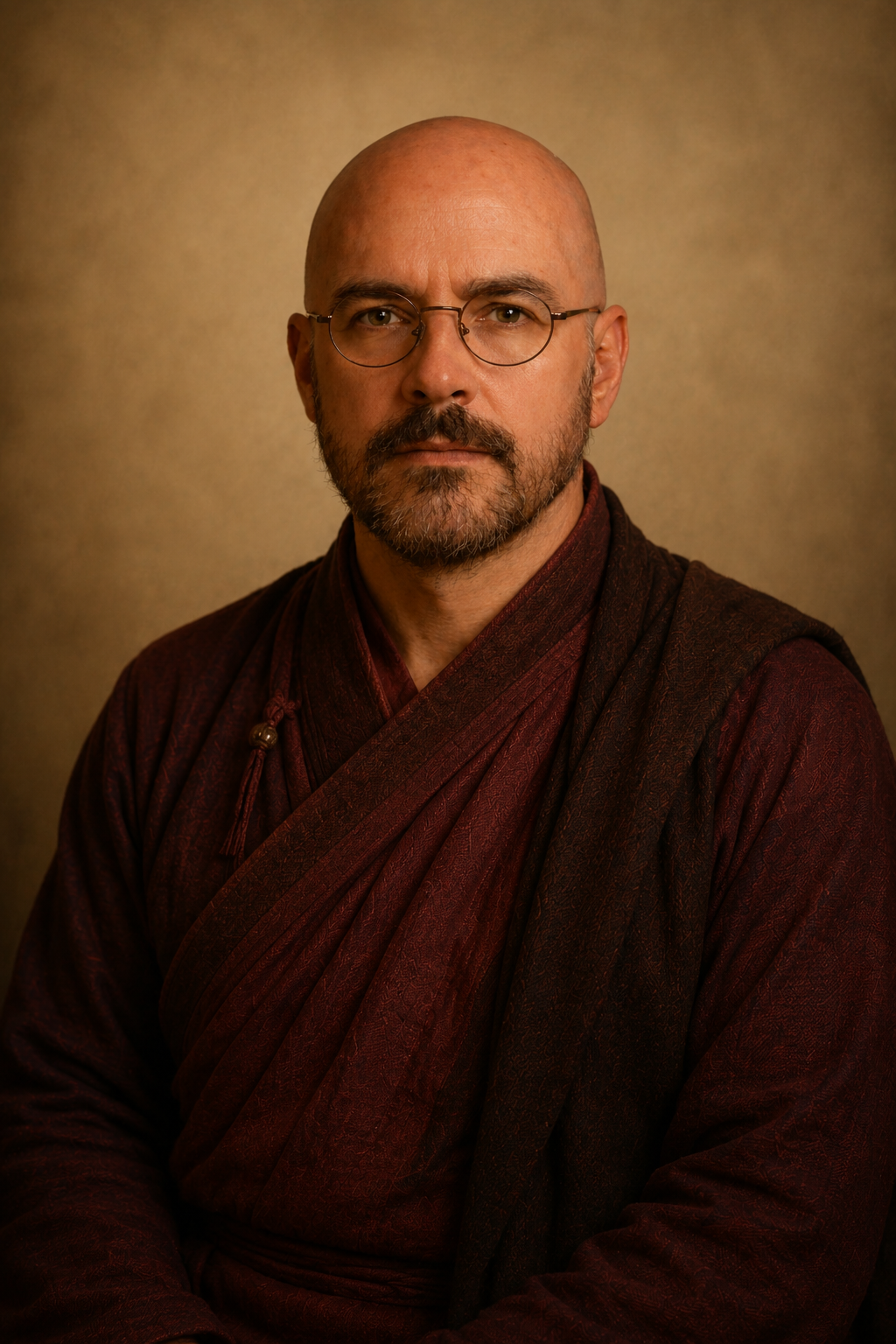
Dharmata is the Buddhist writing and teaching site of Alexander Duncan — also known by the pen name Seten Tomh — a Canadian writer, Dharma teacher, and independent scholar based in Toronto.
The word dharmatā means “suchness,” “reality-as-it-is,” or the intrinsic nature of phenomena. This site is devoted to that inquiry: the attempt to understand the Dharma not merely as doctrine, institution, culture, or belief, but as a living path of liberation, wisdom, and transformation.
Dharmata brings together early Buddhism, the Pāḷi Canon, Mahāyāna, Vajrayāna, Dzogchen, Zen, Taoism, Western esotericism, comparative religion, and contemporary thought. Its purpose is not to flatten these traditions into a vague spirituality, but to ask how the Dharma may be understood, practised, and transmitted in the modern West without losing its depth.
The Work
My writing begins with the classical Buddhist sources, especially the Pāḷi Canon, but it does not end there. I approach Buddhism as a living and evolving transmission: rooted in the Buddha’s awakening, developed through centuries of philosophical and contemplative tradition, and still unfolding in new historical conditions.
A central theme of my work is Ekayāna, the “One Vehicle” or Universal Vehicle: the view that the Dharma is not exhausted by any single school, sect, culture, or historical formulation. The early discourses, Mahāyāna vision, Vajrayāna symbolism, Zen directness, and Western philosophical and esoteric inquiry can all become part of a deeper conversation, provided they are approached with discipline, honesty, and care.
This site therefore includes:
- early Buddhist doctrine and the Pāḷi Canon,
- Mahāyāna and Vajrayāna thought,
- Tibetan Buddhism and Dzogchen,
- Buddhist ethics and social philosophy,
- Dharma practice for lay practitioners,
- Buddhism and Western esotericism,
- Taoism and comparative spirituality,
- poetry,
- myth,
- symbolism, and
- the future of the Dharma in the global West.
The aim is clarity without reduction, depth without obscurity, and openness without spiritual laziness.
Standpoint
I write as a lay Dharma practitioner, teacher, and independent scholar. My approach is non-sectarian, but not rootless. It is grounded in the Bodhisattva ideal, sustained textual study, and long engagement with Buddhist practice, including Tibetan Buddhist foundations.
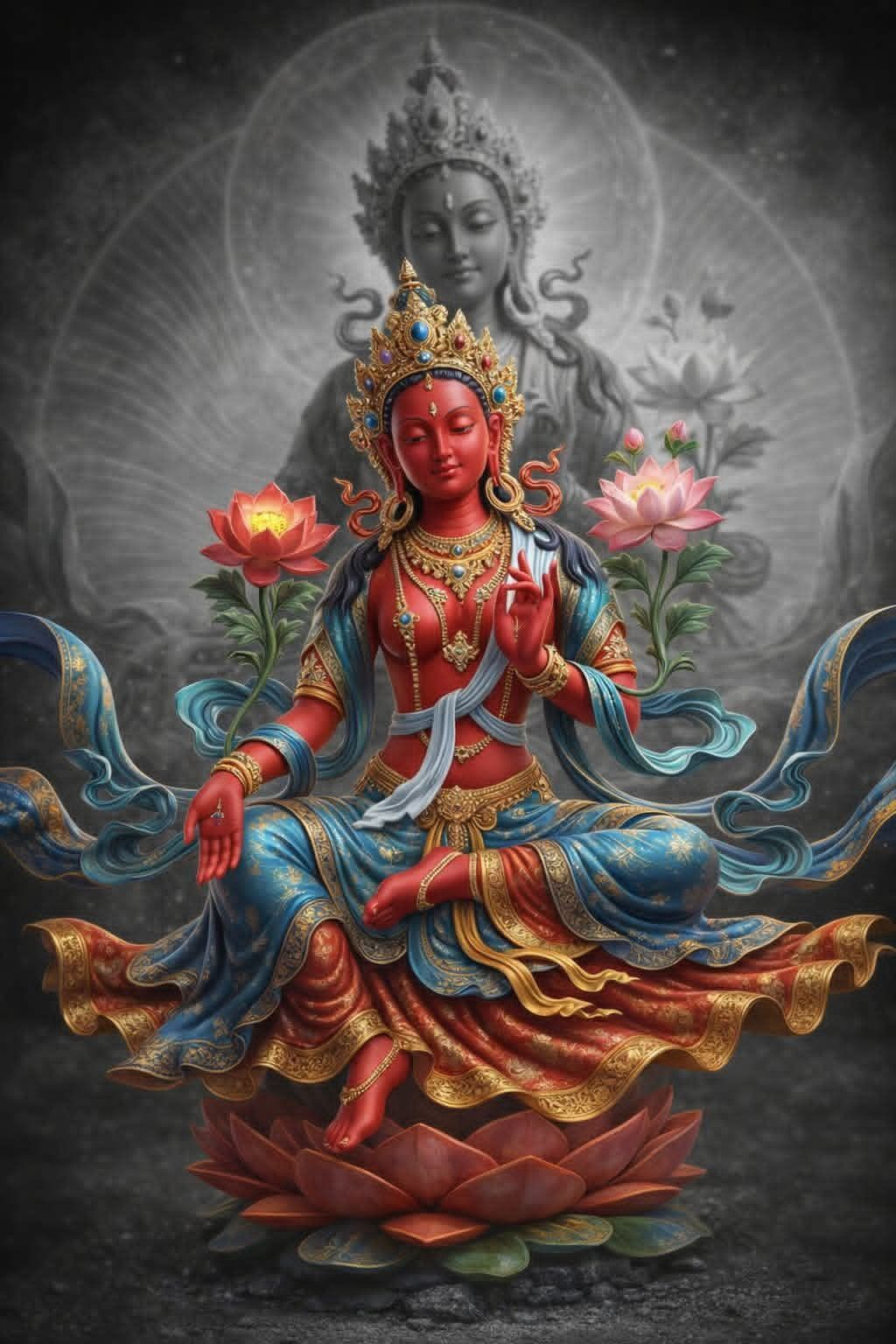
In the late 1980s, a brief but intense encounter with Red Tārā helped orient my practice toward Tibetan Buddhism. Since then, my work has increasingly explored the relation between classical Dharma, visionary experience, symbolic systems, and the transmission of Buddhism beyond its traditional Asian forms.
I am interested in the Dharma as something both ancient and unfinished: a liberating insight that must be received, tested, translated, and re-articulated in each age.
Why This Site Exists
Modern Buddhism in the West often divides into separate compartments: academic Buddhism, ethnic Buddhism, therapeutic mindfulness, devotional practice, secular philosophy, and esoteric or tantric traditions. Each has value. Each also has limits.
Dharmata exists to explore what becomes visible when those compartments are allowed to speak to one another.
The question behind much of this work is simple:
What does the Dharma become when it is transmitted deeply, intelligently, and fearlessly into the modern world?
Not diluted.
Not exoticized.
Not reduced to stress relief.
Not imprisoned in sectarian nostalgia.
But also not severed from lineage, scripture, discipline, or awakening.
This is the territory Dharmata explores.
Where to Begin
New readers may wish to begin with essays and talks on:
- the Pāḷi Canon and early Buddhism,
- the Bodhisattva ideal,
- Ekayāna or Universal Buddhism,
- death and rebirth,
- Buddhist ethics and social transformation,
- Tibetan Buddhism and Dzogchen,
- Buddhism and Western esotericism,
- Dharma transmission to the West,
- artificial intelligence and mind,
- Buddhist prophecy and future history.
The archive is extensive, and the site is best approached as a library rather than a feed. Wander, but do not merely browse. Some texts here are introductory; others assume patience, background, and a taste for the deeper water.
Other Writing
In addition to Dharmata, I maintain Bethelkhem: The Secret Door, a separate site devoted to Western esotericism, Aleister Crowley, Hermeticism, Qabalah, ritual symbolism, and related metaphysical systems.
The two projects are distinct but related. Dharmata is concerned primarily with Buddhism and the Dharma. Bethelkhem explores the Western esoteric current. Both are concerned with the same underlying question: how symbolic, contemplative, and philosophical traditions can disclose deeper structures of consciousness and reality.
Published Works
My published works include books and long-form writings on Buddhism, Taoism, poetry, Western esotericism, financial education, and symbolic philosophy. Major Dharma-related works include:
Buddhist Self-Ordination: A Dharma Strategy for the West
Dharma Notes
Dharma Talks
Fundamental View: Ten Talks on the Pali Canon
Conversations with the Buddha: A Reader’s Guide to the Digha Nikaya
The Treasure House of Secrets
The Good Path of Laozi
Other works, written under my own name and under the names Seten Tomh and Max Demian, explore poetry, Thelema, Crowley, ritual symbolism, and the meeting point between Buddhism and Western esoteric thought.
Explore Buddhist Teachings with the Dharmata GPT
Elsewhere: Internet Archive, Eonic Press, Facebook, Goodreads, Quora
A Final Word
Dharmata is not an official institution, lineage authority, or sectarian platform. It is an independent Dharma project: textual, philosophical, contemplative, and exploratory.
Its purpose is to help recover the full seriousness of the Dharma — not as belief, not as ornament, not as wellness culture, but as a path of awakening.
The doors of the deathless are open.

