TALK PRESENTED AT THE RIVERSIDE DHARMA CENTRE BY SETEN TOMH ON SATURDAY, MAY 14, 2016 (REVISED).
“In the hours of anticipated rain
Buddha takes a seat with composure on the train
while across the skies the UFOs are bound
to make it true
the cracking of the sound
the lobby in their space
the company they said
did not exist
but it does
without a trace.” teainchitwan, “Buddha & the UFO” (YouTube, 2 Nov. 2013)
In his YouTube video, “Buddhism and Alien Abductions” (April 26, 2015), the nonconformist Buddhist monk Ajahn Brahm, who has also stirred the pot on the topic of female ordination in Thailand, broached the topic of the so-called UFO contact experience, declaring that while he has never seen a UFO he has seen garudas and nagas! Garudas are enormous predatory birds with intelligence and social organization. Nagas are snakes or dragons that live in lakes or underground streams and are said to guard treasures. These reptilian beings can also take on a human appearance at will. Nagas are regarded as relatively advanced spiritual beings in Buddhism. Many advanced Buddhist practitioners have been claimed to be nagas (perhaps, reborn in human form), including the Buddha himself, and at least one naga sought to be ordained as a monastic (a request that the Buddha rejected, which is why candidates for Buddhist ordination are still asked if they are human). The Buddha himself says that the naga is a symbol of the arhant (MN 23).
Although most divine beings are generally described as aerial and mobile, some divine beings are earthbound and live on the earth, mostly invisibly, especially in ancient human cities and remote wilderness areas. Sometimes these divine beings appear to human beings and even communicate with them. As higher dimensional beings, the human mind is an open book to them. They communicate telepathically and can influence human beings, including governments, on a subconscious level. These include the nagas. Earthbound divine beings are a distinct class of being and should not be confused with either ghosts or hell beings.
No less impeccable an authority than A.K. Warder says that the statement of no less impeccable a Buddhist king than the great Ashoka himself that by the king’s conversion to the dharma the gods are “mixing” with humanity refers to an ancient UFO flap! Of course, Warder does not use this exact terminology but the implication is clear to anyone familiar with the UFO phenomenon. Perhaps surprisingly, it is also supported by the Pali discourses! Warder writes,
The most likely reference would appear to be to divine portents seen by men, indicating the presence of gods, such as the light and radiance said to precede an appearance of Brahma. … Perhaps Asoka was watching hopefully for the ‘wheel gem,’ … to appear in the sky, and he may have been encouraged by celestial phenomena, such as the appearance of a comet, a nova, or an exceptional display of meteors, to believe that his change of heart and of imperial policy had begun to make itself felt in the universe. That gods might appear to men was widely believed in India in this period. (Indian Buddhism, p. 239f.)
Nor is this the only UFO account associated with Buddhism. The great Buddhist reformer Nichiren avoided execution due to the appearance of a UFO that appeared in the sky like the full moon. In the 19th century, the great Chinese Zen Buddhist master Xu Yun Da Shi climbed Da Luo Peak, where he witnessed numerous UFOs, which he called “wisdom lamps.” Doubtless other examples could be found.
Human beings have described contact experiences with all sorts of mythological beings throughout history. We know these as fairies, elves, pixies, gnomes, and other specific terms for demigods and quasi-supernatural beings that appear and interact with humans. In ancient times, such experiences seem to have been more prevalent than they are today, but as we shall see this may not be the case. Dr. W.Y. Evans-Wentz made a special study of the “fairy faith” in Ireland, and concluded, based on analyzing numerous credible firsthand accounts, that such experiences are less easily dismissed than many might like to believe and that they exhibit their own internal consistency. Native Americans, East Indians, Asians, and indeed all the peoples of the world describe similar beings, which are often said to interact with human beings, abducting people and children and leaving physical signs behind. There are even accounts of sexual relationships, both voluntary and involuntary, with such beings!
Interestingly, Buddhism also refers to such beings. In Buddhist vertical cosmology the realm, plane, world, or dimension – I will use these terms interchangeably – next above our own world, and separated from us by the thinnest of veils, is the realm called the Four Great Kings. The Four Great Kings are divine beings, described as luminous aerial beings, attributed to the four directions and to the four elements that we know as fire, water, air, and earth – a universal archetype. Thus, the realm of the Four Great Kings is an elemental nature realm. The denizens of this realm resemble the fairies, which are also said to be luminous and aerial, including references to divine cities and extensive interactions with humans. The divine beings are even said to travel in “cars fit for the gods” (DN 32).
Finally, the Buddhist texts refer to the anti-gods, another class of divine being which were expelled from the higher spiritual realms and which inhabit the earth, especially the water or where earth and water meet. These are very advanced and intelligent spiritual beings but their spirituality is oriented toward self-love, power, hedonistic enjoyment, and competition – what we in the West might term “pagan.” They are extremely ambitious; barbaric despite their spiritual development; and jealous of the higher spiritual beings; many hate people, although the texts also make a point that some anti-gods honour the Buddha and may even be Buddhists! Although in appearance and behaviour they are like the Judaic notion of demons, in Buddhism anti-gods and hell-beings or demons are distinct classes of being. The Buddhist hells—more accurately described as purgatories—consist of multiple levels and are located below all other realms, including those of animals, hungry ghosts, humans, and antigods. The antigods occupy a realm adjacent to the human world, though it is marked by pride and conflict rather than spiritual progress. They frequently interact with humans as well as with the beings of the lowest of the celestial planes governed by the Four Great Kings.
However, not all the divine beings lost all their divine characteristics, and these coexist with us and interact with human beings, especially spiritually advanced human beings. The Buddhist texts refer to different sorts of such beings, especially the inhabitants of the Thirty-Three Gods, which appear as angelic beings; the inhabitants of the realm of the Four Great Kings, which appear as the nature spirits described by all human societies, and anti-gods, which are spiritually advanced beings that pursue a spirituality based on pride, arrogance, competitiveness, love of power and violence, etc. Nevertheless, at least some anti-gods, as well as other divine beings, are receptive to the teaching and venerate the Buddha and thus may be said to be Buddhists.
Now, when we look at modern UFO reports, we find a surprising range of beings described by contactees—some of which have curious parallels in Buddhist cosmology. There are, for instance, small, gnome-like entities that recall the nature spirits associated with the realm of the Four Great Kings. Others describe aggressive or controlling beings that sound a lot like the antigods—driven by pride, rivalry, and a thirst for dominance.
Even the inhabitants of the realm of the Thirty-Three Gods, next above the Four Great Kings, interact with human beings from time to time. One of the roles of the inhabitants of the realm of the Four Great Kings, and the Four Great Kings themselves, is to report to the Council of the Thirty-Three on the progress of humanity, in a sort of cosmic hierarchy. This is all Canonical.
The Sakkapanha Sutta describes another luminous aerial display in which the divine beings instantaneously transport themselves from the realm of the Thirty-Three Gods to Mount Vediya, where the Buddha is: “Then a tremendous light shone over Mount Vediya, illuminating the village of Amasanda – so great was the power of the divine beings – so that in the surrounding villages they were saying: ‘Look, Mount Vediya is on fire today – it’s burning! It’s in flames. What is the matter, that Mount Vediya and Ambasanda are lit up like this?’ and then were so terrified that their hair stood on end.”
Then there are the more elevated figures: tall, luminous humanoids, calm and radiant, who seem to echo the beings that inhabit the Realm of Form—gods who exist in subtle bodies shaped by deep meditation and refined consciousness. Some people even speak of formless lights or silent, telepathic presences. These might resemble the beings of the Realm of Formlessness—those who exist without any physical form at all, suspended in vast states of pure mind.
That said, not every being described in the UFO literature has a clear match in Buddhist thought. The so-called insectoid or mantis-type entities, for example, are highly speculative and don’t correspond to any well-established category in traditional cosmology. They may instead be modern symbolic projections—products of our own cultural imagination rather than echoes of ancient insight.
Still, what’s striking is that many of these encounters seem to point to a kind of layered, structured universe—not unlike the great vertical hierarchy of realms that Buddhism has long described: from the hells and animal worlds, through the human and celestial planes, and beyond.
Thus, UFOs themselves do not appear to represent a singular phenomenon but rather a plurality of mutually interrelated but also distinct phenomena.
All of this may be dismissed as mythology in our skeptical age were it not for one singular fact, which has been extensively documented by Jacques Valee in his magnum opus, Passport to Magonia (1969, reprinted 2014), and this is the detailed and extensive similarity of the experiences associated with these beings, including descriptions of the beings themselves, with the modern UFO phenomenon, including the contact experience, as well as clear descriptions of the distinctive traits of the UFO phenomenon in the early Buddhist texts themselves. The latter confirm Vallee’s thesis, of which Passport to Magonia is an elaboration, that the UFO phenomenon, whatever else may be, is an archaic and possibly primordial human phenomenon that has been experienced and described throughout human history and that has psychological and physical aspects that clearly identify the UFO phenomenon as a real, distinct phenomenon that cannot be entirely reduced to conventional explanations, including error, hoax, optical illusions, hallucinations, and mental confusion, as is widely claimed by skeptics who have not studied the data deeply or objectively.
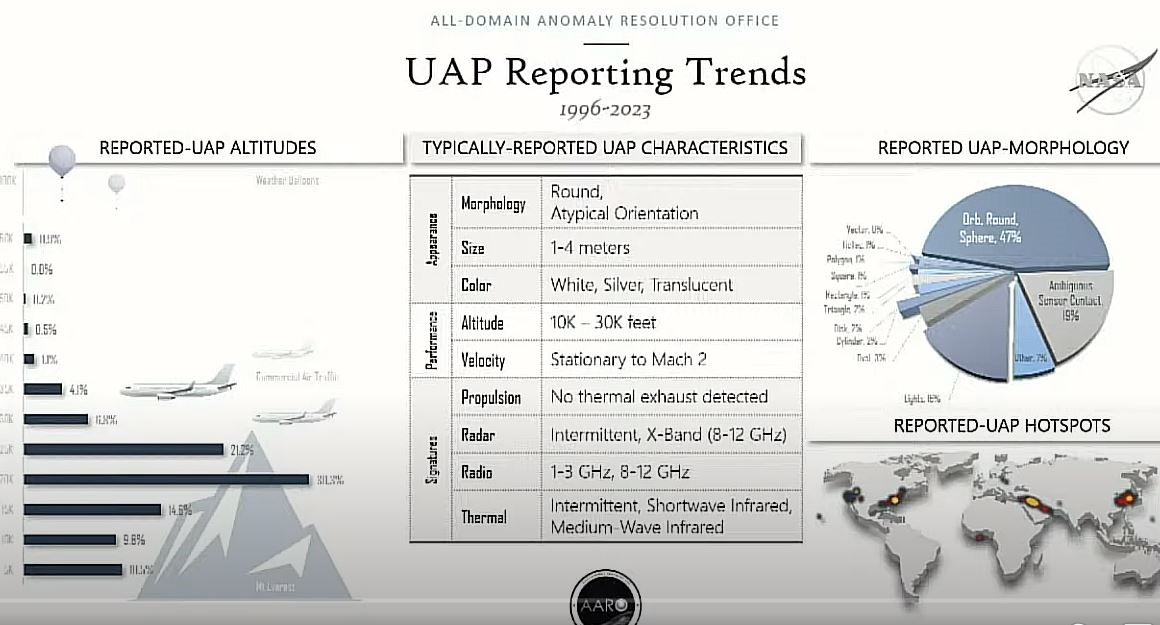
Unfortunately, the whole field of UFO studies has become sensationalized and popularized to the point where it is almost impossible to see it clearly. It has become the tool of an incredible variety of agendas, some of which are based on outright lies and deceptions. Even governments are involved. Because of this confusion, most people do not take this phenomenon seriously. However, anyone who takes the trouble to study the available information objectively will quickly discover that this is a mistake. One must, however, select one’s sources carefully, since there is so much disinformation, especially on the Internet.
Researchers that I have personally found to be most credible, and on whose research this talk is based, include astronomer and computer scientist Dr. Jacques Vallee; astronomer Dr. J. Allen Hynek; nuclear physicist Stanton T. Friedman; psychologist Dr. Carl Gustav Jung; Harvard professor and psychiatrist Dr. John Mack; Professor Karla Turner; journalist and ex-civil servant Nick Pope; journalist Leslie Kean; and anthropologist Dr. W.Y. Evans-Wentz. I would also mention historian Richard Dolan; immunologist Dr. Garry Nolan; and religious scholar Dr. Diana Walsh Pasulka for their contributions to the current phase of research. Colin Wilson’s book Alien Dawn remains a noteworthy popular summary of the evidence presented by these and other researchers. Vallee himself claims to represent an “invisible college” of about a hundred scientists who are privately researching the UFO phenomenon in all its aspects but do not seek publicity for obvious reasons. To summarize their research in detail goes far beyond the scope of this talk, but you can look up these experts for yourself, including many videos on YouTube and buy their books if you are motivated to do so. The main thing that you will notice about these experts is that, while their conclusions are indeed revolutionary, few of them subscribe to any of the prevailing popular theories about UFOs.
Vallee has argued that if these things turn out to be extra-terrestrial, he will be disappointed. His own view seems to be that they are intelligent higher-dimensional beings with a long association with humans and the earth, possibly originating beyond the space-time continuum as we understand it. Even if they originated in our universe their civilization is potentially billions of years old, compared to a mere 10,000 years for human civilization. This parallels Buddhist cosmology with its descriptions of vast reaches of time, extending to billions and even trillions of years (ranging from 10⁻¹² second to 3 × 10¹⁴⁰ years). Others, like Credo Mutwa, believe they are time travellers form the future.
Vallee speculates that they may have learned to master both space and time, in which case the question of their “origin” may be factually meaningless. Since civilization grows exponentially, the qualitative difference between these beings and ourselves is clearly at least millions of times. Such a civilization will have harnessed the zero-point energy and therefore be trans-galactic, even trans-universal or extra-dimensional in nature and not merely extra-terrestrial.
However, it is not my purpose here to argue about the ultimate nature of the UFO phenomenon, which is clearly extraordinarily complex, but only to indicate that the phenomenon is real and exhibits real similarities to the Buddhist world view, confirming Vallee’s hypothesis that UFOs have appeared throughout human history. If we accept that UFOs are real, then Buddhism, along with many other religions, appears to be one of the effects of this phenomenon, at least partly, since the Buddha himself is depicted as interacting and communicating with divine beings or spiritual beings, to which he attributes at least some of his insights, and even appears as a UFO himself! The question that arises, therefore, and is of greatest interest to us is what the Buddhist texts themselves say about this phenomenon, and how this relates to the phenomenon that we experience today. Is there, in fact, a Buddhist theory of the UFO phenomenon?
I personally did not enter the study of the Pali Canon with any expectation that I would find any references to the UFO phenomenon. That there are such references came as a complete surprise to me, although I was vaguely aware of similar references in the Mahabharata and the Puranas. UFOlogy was a very peripheral interest of mine many years ago, but I lost interest in it until quite recently, largely because the evidence is so complex and confusing and I did not want to make UFOlogy my main interest for this reason.
UFO references are not incidental to the Pali Canon. One of the most extensive descriptions in the Pali Canon is the Mahasudassana Sutta in the Digha Nikaya. Interestingly, most of the UFO references in the Pali discourses seem to appear in the Digha Nikaya, which according to Buddhist scholar A.K. Warder consists of the oldest and most authentic Buddhist texts. This discourse immediately follows the Mahaparinibbana Sutta, which describes the death of the Buddha. Mahasudassana consists of maha, ‘great,’ plus sudassana, ‘easily seen,’ ‘having a good appearance,’ the proper name of the gods of the plane of the Beautiful Devas, the third Pure Abode of the world of form. Walshe translates it as “The Great Splendour.” Rhys Davids has “The Great King of Glory.” The language is more than suggestive.
This discourse was spoken in the Mallas’ sal grove at Kusinara, Kosala, shortly before the Buddha’s death in the same place, and is therefore one of the last discourses of the Buddha. The occasion is that Ananda is unhappy that the Buddha is going to die here, “in this miserable little town of wattle and daub, right in the jungle in the back of beyond,” rather than in a great city where the Buddha’s funeral can be arranged by his rich followers in proper style. In response, the Buddha tells Ananda the story of King Mahasudassana, who dominated the region; Kusinara, called at that time Kusavati, was his capital. The Buddha compares Kusavati to the divine city of Alakamanda, thus asserting that divine beings live in cities and introducing the topic of divine beings into the discourse.
The king was clearly devout, as he went up to the verandah on the roof of his palace after washing his head on the day of the full moon, with the intention of fasting. It is of course well-known that fasting sensitizes the consciousness to spiritual perceptions, which is why it is prescribed at such times. At that time, a “divine Wheel Treasure appeared to him, thousand spoked, complete with felloe, hub and all appurtenances.” A.K. Warder clearly accepts Rhys-Davids’s contention that this refers to the disk of the sun. It is also a classic description of a UFO. The description is striking and is clearly like the well-known vision of Ezekiel in the Hebrew Bible or the famed 1917 “Miracle of the Sun” at Fatima.
The king realizes that the appearance of such an object – there is no suggestion that the wheel is anything else – is a sign that he will become a World Ruler, and he formulates the intention to become a World Ruler as an Act of Truth. Sprinkling the wheel with water, so it must have been quite small and close, the wheel then moves in the four directions, plunging in and out of the sea, and wherever the wheel goes the king travels with his army and conquers the land without violence, whereupon the king establishes a peaceful Buddhist empire based on the Five Precepts – do no harm, do not steal, do not commit adultery, do not lie, non-drunkenness, plus moderation in eating. Thus, he conquers all the lands from sea to sea, i.e., the whole Indian subcontinent called Jambudvipa. Finally the wheel returns to Kusavati and hovers above the king’s palace, which also doubles as a supreme court. Thus, the solar wheel treasure (or ‘gem’ in Warder’s translation) became a kind of omen or totem of a righteous World Ruler based on the rule of dharma, and thus a symbol of the teaching itself.
The discourses also refer to how the divine beings experience time at a slower rate than human beings, suggestive of Einstein’s time-dilation paradox. The divine beings also occupy space in a peculiar way, in that a vast number of divine beings can manifest in a small space. We have already mentioned how the divine beings prefer wilderness areas, a characteristic shared with UFOs. UFOs also appear to have a telepathic rapport with the people who observe them, like the divine beings. Brahma appears as an unpredictable luminous aerial display, and the Buddha himself is described as a flying UFO casting off beams of light!
The great and still unresolved question of course is what are these objects? Vallee suggests that the UFO phenomenon acts like a control system, and that UFOs appear more frequently when the fundamental ideological paradigm of human civilization shifts toward scientific rationalism and materialism and away from spirituality (more recently the notion has arisen that religions are a sort of “cargo cult” based on ancient UFO contact experiences). Vallee also associates the appearance of UFOs with apocalyptic images and civilizational collapse. Vallee suggests that UFOs seem to be interested in convincing human beings that higher dimensional beings exist but do so in such a way that the human social order is not disrupted. They seem to have regard for the limitations of human cognition. Since Buddhism is at least in part a result of UFO influence, and is ancient, untainted by modern influences, its explanation is of interest with the caveat that it is well-known that at least some UFOs also lie or combine truth and falsehood in ways designed to disrupt the same expectations that they create. This suggests that they have a complex agenda as far as human beings are concerned, which is far from understood.
As I have already mentioned, Jacques Vallee hypothesized that UFOs have a long-standing historical relationship with the earth and with humanity. This alone explains the historical frequency of UFO sightings and contact experiences, their apparent interest in people, their apparent function as a control system, their ability to communicate with us at all, and the quasi-humanoid appearance of their inhabitants. Interestingly, the Aganna Sutta (“The Primordial Sutta,” DN 27) supports just this view.
Walshe translates the title of this discourse as “On Knowledge of Beginnings.” Rhys Davids has “A Book of Genesis.” Here the Buddha says that periodically at long intervals the world contracts. We know of course that the classical view of modern scientific cosmology is that the universe originates in a singularity, expands, and after an astronomical period gravity forces it to contract back into the original singularity, repeating forever. According to the Buddha, when the world contracts beings are mostly reborn in the Abhassara Brahma world. The name of this world literally means “radiant” or “shining.” This is the seventeenth plane of Buddhist cosmology, the sixth realm from the bottom of the Rupaloka, next above the Brahma realms, and twelve planes above the human realm. It is also associated with the second meditative attainment of “thoughtless bliss.”
So, the Buddha says, “there they dwell, mind-made, feeding on delight, self-luminous, moving through the air, glorious – and they stay like that for a very long time. Eventually, after a very long time, this world begins to expand again. At a time of expansion, the beings from the Abhassara Brahma world, having passed away from there, are mostly reborn in this world. Here they dwell, mind-made, feeding on delight, self-luminous, moving through the air, glorious – and they stay like that for a very long time.”
This passage clearly indicates the operation of moral causality. As the universe contracts, suffering increases, and beings degenerate, thus expiating much of their negative karma. As a result, human beings are reborn in the realm of the radiant divine beings as luminous aerial beings. After a long time, their good karma is exhausted and they are reborn when our universe begins to expand again, still retaining their energetic appearance. Thus, the Big Bang may be regarded as a tunnel or conduit from a higher dimensional world, through which these luminous aerial beings entered our universe roughly 14 billion years ago, although this chronology is now in doubt. These are the spiritual ancestors of humanity, the original human beings, and therefore also our true nature, “the clear light.” Plato has a precisely similar notion when he describes human beings’ original nature as bisexual flying spheres. The Buddha also specifically states that these beings are neither male nor female.
According to the Platonic world view,
in primal times people had double bodies, with faces and limbs turned away from one another. As spherical creatures who wheeled around like clowns doing cartwheels (190a), these original people were very powerful. There were three sexes: the all male, the all female, and the “androgynous,” who was half male, half female. The males were said to have descended from the sun, the females from the earth and the androgynous couples from the moon. These creatures tried to scale the heights of Olympus and planned to set upon the gods (190b-c). Zeus thought about blasting them with thunderbolts, but did not want to deprive himself of their devotions and offerings, so he decided to cripple them by chopping them in half, in effect separating the two bodies. (Wikipedia)
Plato’s description seems to associate humans with the same war in heaven that led to the expulsion of the anti-gods. The fact that we find this explanation of humanity in Buddhism and in Plato’s Symposium suggests that this is one of those archetypal ideas that characterize the primordial philosophy. Certainly, there are other examples too.
So brilliant were these beings, says that Buddha, that the sun, moon, and stars were invisible. However, this might also allude to the early expansion of the universe, before the stars appeared (about 100 to 200 million years after the Big Bang). However, as the universe cooled these beings’ bodies became increasingly material, and as it cooled the world evolved. Over vast eons of time, the luminous beings ingested increasingly coarse and more material foods, and as a result, their bodies became increasingly physical, finally developing the sexual characteristics of male and female. Out of this came all the institutions and the vices of human society, including lust, territoriality, lying, stealing, killing, the development of the authoritarian state, social divisions, warfare, etc.
A variant of this story is repeated in discourse 26 of the Digha Nikaya. The Buddhist symbol of the precious Wheel Treasure, the first possession of the righteous World Ruler, represents the Power of Truth and the teaching itself.
The Pali discourses also attest to the reality of psychic powers. Although scientism discounts such abilities, perhaps it will not surprise us at this juncture to learn that the psychic powers attested to by Buddhism, including telepathic communication, astronomical visions, communication with divine beings, time dilation, teleportation, invisibility, the ability to pass through matter, and levitation are all attested to in the UFO literature as well as in the early Pali Buddhist discourses. Credible modern cases suggest that many of these experiences, perhaps most or even all of them, are not merely psychological, but leave behind physical signs and are therefore at least partly material in nature. Many UFO experiencers, especially contactees, have reported spontaneously developing many of these abilities after their UFO contact experiences. People familiar with the literature of parapsychology will discover numerous additional examples. Reality is far more multifaceted and complex than the conventional view allows.
In addition to the foregoing, the Buddhist texts also describe a specific UFO-type manifestation called the Precious Wheel Treasure. The Precious Wheel Treasure symbolizes the power of truth and is associated with the teaching. The manifestation of this phenomenon has all the characteristics typical of the UFO phenomenon, including luminosity, unpredictability, apparent intelligence, spiritual messages, and the classic “psychic powers” described in the Buddhist texts, including the ability to replicate and project multiple images of themselves, invisibility, the ability to pass through matter, and levitation or flying behaviour, as well as inducing astronomical visions and powers of healing and time dilation or “lost time.” Many people who have close encounters with UFOs often report developing at least some psychic abilities themselves, and often experience personal transformative experiences characterized by enhanced creativity, compassion, and spiritual and environmental concerns, as well as clairvoyance, clairaudience, astral travel, physical travel to other realms, and telepathy, also reported in the Buddhist literature.
According to the oldest Buddhist texts, human beings originated in the Abhassara Brahma world. Literally meaning “radiant,” the Abhassara world corresponds to the second meditative attainment, characterized by the experience of delight and joy. The Abhassara divine beings are given to exclamations of joy, and their bodies emit flashing rays of light like lightning. The Abhassara divine beings look very much alike but have individuality. The Abhassara world transcends the periodic destruction by fire that characterizes the lower worlds at the end of each age. The Abhassara world is, however, subject to periodic destruction by water. The lifespan of these divine beings is two or eight mahakalpas, perhaps 3 to 10 billion years.
When the universe is destroyed, beings are reborn in the Abhassara realm and when the universe reappears, beings from the Abhassara realm are the first to be reborn in our universe.
The texts describe the Abhassara devas as luminous aerial objects. According to our hypothesis, they enter our universe at the “big bang,” which an increasing number of theorists are hypothesizing is a “white hole,” the terminus of a quantum tunnel that leads to a black hole in another universe. The Buddhist texts state that these beings appeared in the universe prior to the appearance of stars and galaxies.
Over time, with the gradual cooling of the cosmic inflation, the Abhassara divine beings become increasingly coarse and material, losing their luminous appearance as the stars and galaxies appear. This is attributed to their increasing infatuation with sensual pleasure. Ultimately, they appear as gendered human beings, who till the soil for food and develop territoriality, private property, the state, and all the vices associated with human beings – lust, greed, violence, warfare, etc.
This description is strikingly similar to the UFO phenomenon, including the manifestation of UFOs as luminous aerial phenomena, their apparent intentionality suggestive of intelligence, their ability to manifest physically and communicate with human beings telepathically, and the physical appearance of their inhabitants, which include similar beings of great nobility and beauty; smaller, gnome-like beings; and reptilian-type entities. UFO inhabitants also manifest a vast range of behaviours, from helpful and healing to positively malevolent and hostile, corresponding to divine beings and anti-gods, respectively.
The coincidences between the UFO phenomenon and similar descriptions in the Buddhist discourses are striking and extensive. It stretches credulity to believe that these similarities are accidental. These similarities further support Jacques Vallee’s hypothesis that the UFO phenomenon is ancient, perhaps even primordial, and has been experienced and described by human beings for thousands and probably tens of thousands of years or more.
Revised June 20, 2025 CE
Appendix
From The Treasure House of Secrets:
According to the Sanskrit version of the Lotus Sutra, the “Brahma heavenly kings” travel vast distances (“five hundred myriad kotis of domains,” a koti itself referring to tens or hundreds of millions or more), coming from all directions in search of the luminous phenomenon that accompanies the enlightenment of Universal Surpassing Wisdom, to the Bodhi tree in the “western quarter” in their “aerial cars” (the Chinese commentaries describe these as mobile like carriages), where they circle him hundreds of thousands of times and strew him with flowers.
These “aerial cars” are themselves described as luminous. The alternative translation, “palaces,” suggests that these “aerial cars” are inhabited. I have discussed the relationship between the UFO phenomenon and Buddhism in “Buddhism and the UFO Phenomenon.” They entreat the Buddha to reveal the dharma after 180 ages of ignorance.
The Buddha introduces the topic of time dilation, declaring, “by the power of my Tathagata-wisdom, I observe the length of time as if it were only today.”
Chapter XV Springing Up Out of the Earth (Welling Up Out of the Earth; Issuing of Bodhisattvas from the Gaps of the Earth)
In this prelude to chapter 16 (chapter 15 of the Sanskrit edition), in which the essential teaching of the Lotus Sutra is finally plainly revealed, the assembled bodhisattvas offer to teach the Lotus Sutra to others. However, the Buddha spurns their offer, declaring that the so-called “originally converted bodhisattvas” are chosen messengers who alone can teach the Lotus Sutra in the future. These bodhisattvas have been personally taught and trained by the Buddha, and are countless in number. At that moment, the earth shakes and is split asunder by earthquakes, and out of the great clefts, there appear vast numbers of luminous “bodhisattvas of the earth” that rise out of the earth and ascend to the great aerial stupa that we encountered in chapter 11. This recalls the allusion of the Buddha’s earth-touching gesture when he appeals to the deva of the earth in response to Mara’s challenge to prove the fact of his enlightenment.
Four bodhisattvas lead the bodhisattvas of the earth: Superior Practices (the leader), Boundless Practices, Pure Practices, and Firmly Established Practices, which have been interpreted in various ways.
The bodhisattvas that rise out of the earth take their seats cross-legged all around the Buddha. The Buddha declares that Maitreya will be the next Buddha. The Sanskrit version of the text refers to the Buddha’s “manliness.”
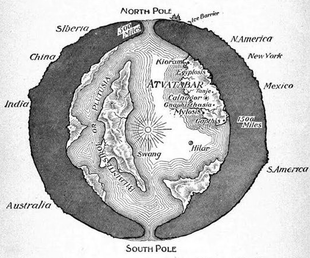
The Buddha tells the assembly that the bodhisattvas that emerge out of the earth inhabit a vast “open space” within the earth (saha)-sphere. Here we see a possible archaic origin for the Hollow Earth Theory! This is a universal idea found in mythology, folklore, and legends, including Cabala and Tibetan Buddhism (Agharti). The inner earth is also the reputed location of Shambhala. In Greek lore, an ancient god called Zalmoxis inhabited these interior caverns. According to Celtic lore there is a cave in Station Island called Chuachan that leads to the lower realms, also known as St. Patrick’s Purgatory. The Tuatha De Danaan, who introduced Druidism to Ireland, also emerged out of the interior earth through a cave in County Down. Other similar sites include the north side of the Missouri River, whence the Mandan people are said to have originated; Cedar Creek, near the San Carlos Apache Indian Reservation; and the Red River above the junction of the Mississippi River. The Cedar Creek caverns were shown to Leclerc Milford, a French military officer and adventurer, by the Creek Indians in 1781, who declared that there was room there for fifteen or twenty thousand families. Hopi tradition refers to a similar cave in the Grand Canyon. The Incas have a tradition of such a cave east of Cuzco, Peru. Many ancient peoples believed that their ancestors came out of the interior of the earth. Many believe that they still exist.
Edmond Halley, after whom Halley ’s Comet is named, proposed that the earth is hollow in 1692. Some traditions identify the interior inhabitants as “devilish.” The interior earth has more recently been proposed as the source of the UFO phenomenon. Astronomer and computer scientist Dr. Jacques Vallee in particular has suggested that the UFO phenomenon is actually terrestrial in origin. W. Holiday’s “goblin universe” idea, popularized by Colin Wilson, may also be included here. If one looks at the imaginative interpretation of the hollow earth hypothesis in fiction, it seems to be associated with inversion, archaism, high technology, secret knowledge, spirituality, alien life, and utopianism. The hollow earth meme may be a psychological projection of a reality that has a larger, more profound interpretation.
The various sensations that are described in the sutra are typical effects of advanced yoga practice or psychedelic experience. The references to Light Sound and Universal Purity may be equivalent to the Devas of Radiant Glory and Streaming Radiance. Other cosmological references are familiar, including the Avici hell, Mount Meru (Sumeru) and its Iron Circle, the oceans within the iron rim, and the Brahma world. The qualification “without and within” suggests a recognition these worlds are objective and subjective, similar to Jung’s concept of the psychoid. Similarly, the “palaces” of the gods, which are interestingly both male and female, also refer to “aerial vehicles” or UFOs. Kato et al. refer to Light Sound as the second realm of meditation heavens, and Universal Purity as the third realm of meditation heavens.
Chapter XXI The Chapter of the Spiritual Influence of the Tathagata
The wisdom beings of the earth, who emerged out of the earth in chapter 15 and are now seated around the Buddha in the stupa UFO, “equal in number to the atoms in the thousandfold world,” declare their intention to teach the Lotus Sutra so as to attain the Great Dharma, whereupon the Buddha and the whole assembly extend their tongues and emit innumerable rays of coloured light, reaching to the limits of the multiverse.
Fine Adornments was a follower of Brahmanism, but his wife and their two sons were attracted to the teachings of the Buddha, and the sons sought to hear the Buddha preach the Lotus Sutra. Persuading their father by a magical display, strongly reminiscent of the UFO phenomenon, the sons seek their mother’s permission to become monastics in order to follow the Buddha, which she gives, because buddhas are as hard to find “as it would be for a one-eyed tortoise to encounter a hole in a floating piece of wood.”
References
Buddhism and Alien Abductions
Did Humans Evolve to See Things as They Really Are?
Hsu Yun
John E. Mack on Dalai Lama’s Views on UFOs and Aliens
Mogoa Ancient UFOs – Thousand Buddha Caves
UFO Witness Buddhist Monk
Note
[1] See, e.g., I.B. Horner, trans., The Book of the Discipline (Vinaya-Pitaka), Vol. I (Suttavibhanga), p. lvii. Horner also refers to monastics having sexual intercourse with yakkhinis, paralleling similar UFO reports.
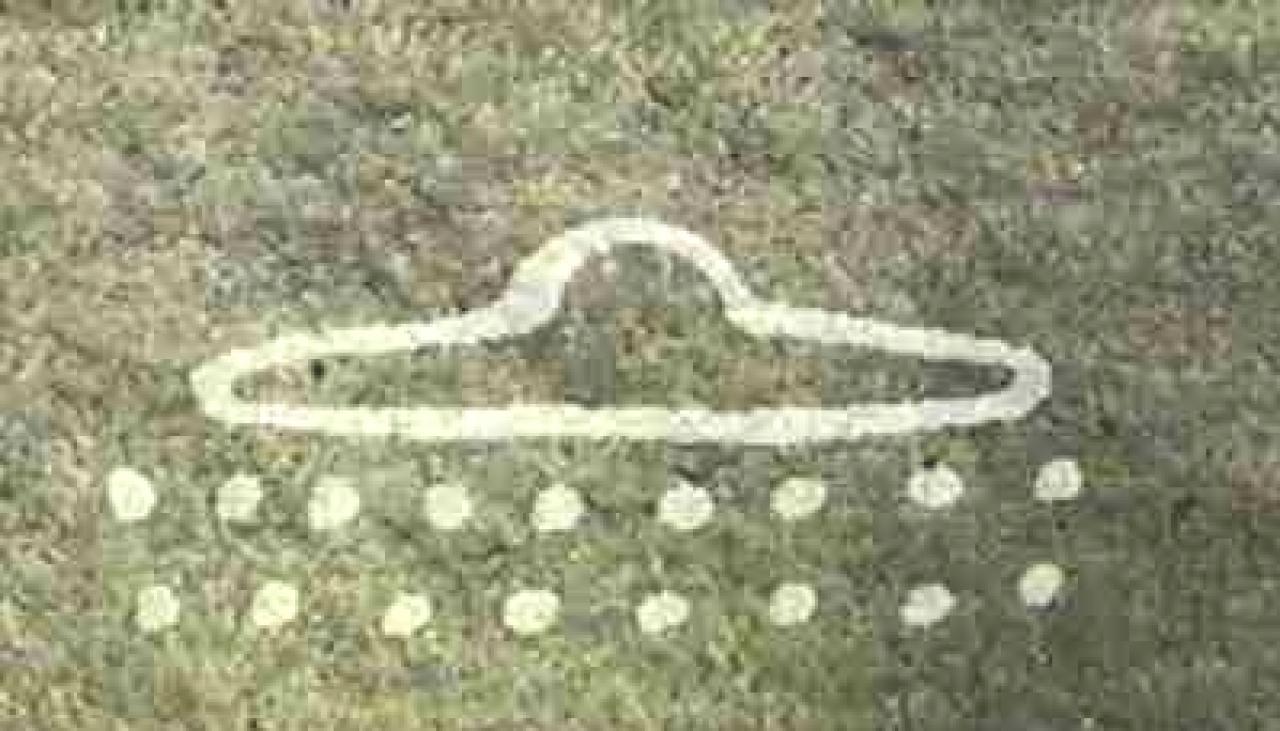
[2] Credible contemporary accounts of “sphere UFOs” describe them as about 3 feet in diameter and approaching people as close as ten to fifteen feet.
https://youtu.be/7kLTgPdVosc?si=hLkobiBruapxRiKu&t=992
References
Buddhism and Alien Abductions
Did Humans Evolve to See Things as They Really Are?
Hsu Yun
John E. Mack on Dalai Lama’s Views on UFOs and Aliens
Mogoa Ancient UFOs – Thousand Buddha Caves
UFO Witness Buddhist Monk
 Dharmata