
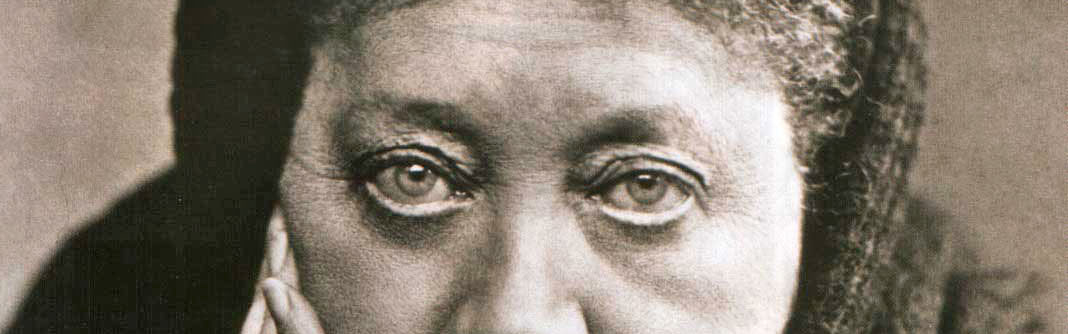
A Paper Written for 134th Anniversary of the Death of H.P. Blavatsky, May 8, 2025
Part I: Foundations and Parallels
Introduction: Seeking the Teaching
When I first encountered the writings of Helena Petrovna Blavatsky and her Theosophical successors, I was struck by the grand vision of their cosmology and the speculative reach of their ideas. Amidst the archaic language and esoteric symbolism, I sensed resonances of authentic Buddhist teachings. This talk is an exploration of those resonances—a journey to uncover and critically examine the elements of the Teaching within the Theosophical corpus.
I seek to use her writings as a mirror reflecting certain features of the Teaching, particularly from the Mahayana and Vajrayana traditions. By identifying recurring themes in Blavatsky and Sinnett that resonate with Buddhist principles—moral causality, rebirth, compassion, bodhisattvas, inner transformation, esoteric knowledge, and the ideal of liberation—I hope to disentangle the authentic Buddhist sources of Theosophy.
Historical Context: Blavatsky’s Encounter with Buddhism
Helena Blavatsky, a Russian occultist and co-founder of the Theosophical Society in 1875, played a pivotal role in introducing Eastern religious concepts to the Western world. Her travels to India and Ceylon (now Sri Lanka) exposed her to Buddhist teachings, and in 1880, she and Colonel Henry Steel Olcott officially converted to Buddhism by taking the Five Precepts in a ceremony at Ramayana Nikayana in Ceylon. They were among the first Westerners to do so, and their embrace of Buddhism was met with intrigue and enthusiasm by local communities .
Blavatsky’s engagement with Buddhism was complex. She referred to herself as a “Buddhist” and incorporated Buddhist terminology into her writings. She claimed that the Buddha sought to return to the teachings of the Vedas, positioning Buddhism as a more accurate survival of ancient Brahmanism than modern Hinduism. This perspective reflects her broader belief in an “ancient wisdom religion” underlying all world religions—a concept central to Theosophy.
The Voice of the Silence: Echoes of the Bodhisattva Ideal
One of the most striking intersections between Theosophy and Buddhism is found in Blavatsky’s The Voice of the Silence (1889). Presented as a translation of a secret Tibetan text known as the Book of the Golden Precepts, this work delves into themes that resonate deeply with Mahayana Buddhism.
The text emphasizes the renunciation of personal emancipation in favor of universal liberation—a core tenet of the bodhisattva path in which the bodhisattva acts as a shepherd, leading his flock to emancipation. The repeated refrain, “Thou canst not travel on the Path until thou hast become that Path itself,” mirrors Zen and Dzogchen teachings on non-duality and self-emptying. References to Avalokiteshvara, the embodiment of compassion, and the idea that one should not enter Nirvana while a single being remains unenlightened, reflect an interpretation of the bodhisattva vow.
The themes that The Voice of the Silence explores suggest a genuine engagement with Mahayana ideals. Blavatsky’s articulation of these concepts, especially at a time when reliable translations of Mahayana texts were scarce in the West, is noteworthy.
The Mahatma Letters
The Mahatma Letters, allegedly written by advanced adepts Morya (possibly a corruption of Tibetan Mu ra) and Koot Hoomi (possibly a corruption of Tibetan Sku thu med) to A.P. Sinnett, present another intriguing parallel to Buddhist concepts. These “Masters” claim to have transcended selfish rebirth and act out of compassion, guiding humanity along the path of evolution. This portrayal aligns with the traditional Buddhist concept of bodhisattvas operating on a cosmic scale.
The letters delve into topics such as moral causality, the aggregates, and emancipation. Sinnett’s Esoteric Buddhism (1883), based on these letters, attempts to reconstruct Buddhist metaphysics in a Western idiom including moral causality, the aggregates, and emancipation, identified with the annihilation of the ego—it represents an earnest attempt to explain these ideas to a 19th-century readership.
If we interpret the Mahatmas as bodhisattva projections, their symbolic function becomes more apparent as archetypes guiding seekers toward spiritual evolution.
Moral Causality and Rebirth
In Theosophy, moral causality is treated as a cosmic law governing cycles of rebirth, human evolution, and planetary development.
Blavatsky’s introduction of moral causality and rebirth to Western audiences was significant. Her emphasis on moral causality and the importance of ethical conduct retains something of Buddhism’s flavor. For earnest seekers, Theosophy’s treatment of moral causality can serve as an introduction to the Teaching.
Shambhala and the Kalachakra
In Vajrayana Buddhism, particularly in the Kalachakra Tantra, Shambhala is a hidden kingdom ruled by enlightened kings, culminating in a final apocalyptic battle that reestablishes the Teaching. This realm represents both a vision of society and a state of realized mind.
Theosophy adopts the image of Shambhala but transforms it into the seat of the “spiritual hierarchy,” the location of the Lord of the World, Sanat Kumara, an entity identified in the Pali Canon. In this interpretation, Shambhala becomes a governing council of ascended masters orchestrating human spiritual evolution, an idea that we also find presaged in the Pali Canon.
This transformation preserves the ideal of a sacred centre guiding the aspirant. Shambhala, in its Theosophical form, may function as a skillful means for certain minds, orienting seekers toward the inner reality symbolized by the tantric Shambhala.
The Book of Dzyan and Dzogchen
The name and themes of Blavatsky’s Book of Dzyan, from which she claimed to derive her Stanzas of Dzyan in The Secret Doctrine, invite speculation. Some have associated “Dzyan” with Dzogchen, the “Great Perfection” teachings of the Nyingma school of Tibetan Buddhism.
Dzogchen teaches that the ultimate nature of mind is luminous, non-conceptual, and spontaneously present. It is not constructed but revealed when obscurations are cleared. This radically non-dual teaching resists systematization.
Blavatsky’s “Dzyan” is cosmological, outlining the formation of worlds, the descent of differentiated mindstreams, which Blavatsky. borrowing form Leibnitz, calls “monads,” and social and evolutionary cycles. Her insistence on an eternal ground of being, a luminous source from which all things arise, hints at a Dzogchen ontology. It’s possible that Blavatsky encountered fragments of Dzogchen teachings and mythologized them into her own creation story.
Blavatsky and Zen: Echoes Through Suzuki
D.T. Suzuki, who admired Blavatsky, once remarked that she had “somehow” accessed teachings close to esoteric Mahayana. He acknowledged that some of her writing touched a spiritual nerve.
Blavatsky’s emphasis on inner transformation, the unseen spiritual path, and the necessity of compassion above mere knowledge resonates with Zen and Mahayana ideals. Her disdain for priestcraft, dogma, and blind belief mirrors the Buddhist critique of attachment to views. Her focus on direct experience echoes Zen’s emphasis on direct realization.
These resonances are noteworthy. They offer entry points for a Buddhist reading of Theosophy.
Conclusion: Discovering the Teaching Within Theosophy
In exploring the intersections between Theosophy and Buddhism, we find a complex tapestry of genuine engagement and creative synthesis. Blavatsky’s writings contain resonances of authentic Buddhist principles. By critically examining these resonances, we can extract valuable insights and use them to deepen our understanding of the Teaching.
We might also recognize the preliminary orientation toward the Teaching that her writings offer, cloaked in Theosophical garb but pointing beyond it.
In the Kalachakra tradition, Shambhala is not just a place but the inner mandala of the purified mind. In Dzogchen, the final teaching is that nothing needs to be added, nothing removed—only the veils must be lifted. Blavatsky did indeed receive whispers of the Teaching and may have pointed others in its direction.
As the Buddha advised:
Just as a goldsmith tests gold by burning, cutting, and rubbing, so are my words to be tested, not taken on faith.
Part II: Ethics, Compassion, and the Inner Path
Introduction
In Part I of this talk, we explored how Theosophical teachings—particularly those of Helena Blavatsky and A.P. Sinnett—mirror Mahayana and Vajrayana Buddhist doctrine. From the bodhisattva archetype found in the Mahatma Letters to the echoed ideal of Shambhala, we observed that Theosophy is not empty of the Teaching.
In Part II, I shift focus to the practical, psychological, and ethical dimensions of this encounter. If there is anything redeemable or instructive in the Theosophical worldview from a Buddhist standpoint, it must be more than cosmology. It must illuminate or support the path of transformation—the Eightfold Path, the cultivation of compassion, the realization of emptiness, and the deepening of insight into the nature of mind.
So the question I ask now is this: Does Theosophy help us walk the Path? Or does it lead us astray? The answer, I suggest, is it depends on how we use it.
1. Theosophy’s Moral Idealism and Buddhist Ethics
At the heart of Buddhist practice lies the cultivation of ethical discipline—grounded in the precepts but ultimately supported by wisdom and compassion. In early Buddhism, ethics arise from mindfulness of consequences and the understanding of interconnectedness. In Mahayana, they deepen into the bodhisattva’s vow to benefit all sentient beings. Vajrayana frames ethics in terms of sacred view and skillful means.
In Theosophy, the ethical framework is emphatically present. Blavatsky writes:
Real Theosophy is altruism, and it is the duty of every Theosophist to do all he can for the suffering humanity. (The Key to Theosophy, 1889)
This rhetoric mirrors Mahayana ethics. The Mahatmas are held up as moral exemplars, and ethics are grounded in a sort of cosmic evolution: good actions lead the soul upward; bad ones cause devolution or stagnation.
This is not wrong per se. Where Buddhist ethics are precise, contextual, and psychologically informed, Theosophical ethics are noble but generalized. Still, for someone entirely unfamiliar with Buddhist precepts, Theosophy may function as a preparatory vehicle.
For instance, The Voice of the Silence speaks of:
Compassion is no attribute. It is the Law of Laws—eternal Harmony.
This phrasing is not canonical, but it does reflect something of the Mahayana view—that compassion is not just an emotion, but a fundamental orientation aligned with ultimate truth. If Theosophy inspires ethical reflection, it may lead some toward authentic practice.
2. The Path of the Adept and the Bodhisattva Vow
The figure of the adept or Master in Theosophy—someone who has transcended personal karma, renounced selfish emancipation, and guides others—bears obvious resemblance to the Mahayana bodhisattva ideal. In Buddhist tradition, such beings delay their own final emancipation to assist others on the path. In Theosophy, the Mahatmas (especially Morya and Koot Hoomi) perform this function in a kind of esoteric hierarchy.
Buddhist literature provides countless teachings on transcendent virtues, meditation, ethical purification, and selflessness. Theosophy assumes that the adept achieves these states through secret initiation, ascetic practices, and the “occult path.” The inner transformation required is implied.
And yet The Voice of the Silence again offers striking utterances:
Kill out desire, but if thou killest it take heed lest from the dead it should again arise.
This line shows clear familiarity with the inner combat against craving which lies at the heart of Buddhist practice. It also reflects the Mahayana concern with sublimation rather than suppression. The idea that desire transforms into compassion, and not simply vanishes, is a subtle insight.
In this way, Theosophy offers aspects of the bodhisattva path, couched in dramatic language and occasionally penetrating in vision. To the informed Buddhist reader, these aspects are not without merit.
3. Inner Planes and Luminous Mind: Dzogchen Shadows
One of the most ambitious parallels is between the Theosophical concept of planes of consciousness and the luminous, empty nature of mind as described in Dzogchen and Yogacara.
Theosophy posits multiple layers of reality: physical, astral, mental, buddhic, and atmic. Each represents a progressively finer grade of vibration and corresponds to levels of being or consciousness. These ideas are often mapped to bodies: the etheric double, the astral body, and so on.
In Dzogchen, mind has only three modes:
- ordinary dualistic consciousness
- nondual awareness
- methods of resting in and directly perceiving nondual awareness
Yet Dzogchen does speak of visionary appearances, luminous displays, and energetic fields that arise in advanced practice, as does the Pali Canon. While Theosophy reifies these into metaphysical structures, Dzogchen treats them as ephemeral phenomena within awareness.
In other words: Theosophy describes as ontology what Dzogchen sees as epiphenomenon.
But if we interpret Theosophical “planes” metaphorically—as states of mind, or as symbolic of the refinement of perception—then they can be understood within a Dzogchen-informed psychology. The idea that our ordinary consciousness can refine itself into something radiant, ego-free, and compassionate is not foreign to Buddhism. Dzogchen simply warns against reifying the journey.
4. Theosophy and Emptiness
Buddhism teaches that all phenomena are empty of inherent existence. They arise interdependently, lack self-nature, and are impermanent and insubstantial. This is not nihilism, but a profound realization that liberates the mind from grasping.
When Blavatsky claims that reality is “illusion” or “maya,” she often means that the physical world is an illusion.
However, if one treats “illusion” in Theosophy as an early grasp at non-attachment, then some continuity is apparent. The idea that clinging to transient phenomena leads to suffering is interpreted through a cosmic lens rather than a personal, meditative one.
In short, Theosophy recognizes the problem (suffering due to ignorance and craving).
5. The Inner Teacher and the Doctrine of Self-Reliance
One of the strongest spiritual messages in Blavatsky’s works—often overlooked—is the emphasis on direct insight. Again from The Voice of the Silence:
Give up thy life, if thou wouldst live.
This kind of paradox, evocative of Zen koans, points to the surrender of ego, the abandonment of personal will. Blavatsky constantly warns against spiritual materialism, pride, and attachment to psychic powers. She insists that real initiation is internal, not conferred by others.
This is strikingly consistent with Zen, Dzogchen, and early Buddhist admonitions to verify truth through direct experience, not through belief or ceremony. Her oft-repeated motto:
There is no religion higher than Truth
—can be read as a restatement of the Kalama Sutta. Her rejection of dogmatism, sectarianism, and blind obedience has a Buddhist ring. At its best, Theosophy may point students away from dependence on outer forms and toward the realization of the mind’s own clarity.
6. Beyond Blavatsky: Theosophy’s Legacy and Buddhist Integration
Theosophy did something remarkable: it introduced the West to core Buddhist concepts—moral causality, rebirth, the aggregates, even emancipation—decades before the academic study of Buddhism took root. It offered spiritual seekers in Victorian England a map of reality that did not require Christian theology. It helped break the monopoly of Western religious thought.
And for some—like D.T. Suzuki, who acknowledged that Blavatsky had “somehow accessed” advanced Mahayana principles—it opened a door to deeper study.
If we are generous, we might say that Theosophy functioned as a cultural bardo—an in-between realm—where Buddhist ideas were not entirely lost.
Conclusion
So, what can we extract from all this?
- Theosophy preserves the bodhisattva ideal, the importance of compassion, and the necessity of inner transformation.
- Its ethics are noble, pointing toward altruism.
- It retains a genuine and sincere aspiration toward liberation.
- And perhaps most usefully, it can be read allegorically, mythopoetically, as a Western gnostic mirror to the Teaching.
For those of us committed to the Teaching, Blavatsky and Sinnett may be regarded as symptoms of a deeper longing: the yearning of Western consciousness to rediscover what it had lost—the direct path to awakening.
We may learn, honour their curiosity, and understand their symbols in the light of right view, right action, and right realization.
To Theosophists I say, let your longing for truth guide you beyond its limits. Look to the Secret Teaching as the open path walked by sages for millennia. Let the occult give way to the obvious. Let the masters dissolve into the mirror of your own awareness.
And may all beings—Theosophists, Buddhists, and everyone in between—awaken to that truth.
Sarva Mangalam.
Bibliography
Blavatsky, H.P. From the Caves and Jungles of Hindostan.
———-. Isis Unveiled. 2 vols.
———-. The Key of Theosophy.
———-. The Secret Doctrine. 2 vols.
———-. The Voice of the Silence.
Blavatsky, H.P. Ed. Michael Gomes. Isis Unveiled: Abridged Edition. 2 vols.
———-. Ed. Michael Gomes. The Secret Doctrine: Abridged Edition. 2 vols.
———-, and Annie Besant. The Secret Doctrine. Vol. III.
Caldwell, Daniel H., ed. The Esoteric Papers of Madame Blavatsky.
Gomes, Michael. The Dawning of the Theosophical Movement.
Meade, Marion. Madame Blavatsky: The Woman Behind the Myth.
Sinnett, Alfred Percy. Esoteric Buddhism.
———-. The Mahatma Letters.
 Dharmata